Wednesday, August 1, 2018

Mission: Impossible - Fallout - Film Review


I’ll be honest: this is one of the toughest reviews I’ve ever had to write. The urge to just type ‘WOW’ in all caps over and over again is proving difficult to overcome. I’ll do my best to give you, the ever-supportive reading public, a critique worth your time. This is my mission, should I choose to accept it. Let’s hope I don’t self-destruct in five seconds.

Are there any film franchises out there that can claim their sixth entry as their best? Over the past two decades, Mission: Impossible has proven the rare example of a series that gets better and better as it goes along. With Ghost Protocol, director Brad Bird infused it with new life and now, with Fallout, returning writer/director Christopher McQuarrie and producer/star Tom Cruise have raised the bar for the action genre as a whole. They should have just called it Mission: Impossible - Standout. 

At the film’s outset, things are grim for the IMF (That’s Impossible Mission Force, for you uneducated heathens out there). Ethan Hunt and his team are tasked with intercepting three plutonium cores in order to ensure they don’t fall into the wrong hands. Naturally, things go awry when Hunt makes a split decision that saves the lives of his friends but costs them the plutonium. It ends up getting snagged by The Apostles, a sinister organization comprised of members from the now defunct Syndicate group, which was dismantled in Rogue Nation. It’s up to Hunt and his team to recover the plutonium before The Apostles can utilize it for their nefarious purposes. You know, world domination, explosions, chaos and mass destruction - all that standard bad guy stuff.

From the get-go, Fallout contains a welcome element of grim intensity previous entries in this series have lacked. That’s not to say those films weren’t effective or that Fallout is all doom and gloom. It’s just that McQuarrie, the only director to return for a second Mission, has done an excellent job crafting a stronger set of stakes this time around, upping the ante and making the resulting thrills all the more potent. But while Fallout may have more of an edge than McQuarrie’s previous effort Rogue Nation, its fun quotient is still off the charts, managing to top Rogue Nation’s highest highs with ease. All other puny action movies are left to sputter in the dust. 

That Fallout is such a successful effort is a pleasant surprise. I’ll admit I wasn’t rooting for McQuarrie’s return following Rogue Nation, which I enjoyed, but found a bit by-the-numbers, especially following Bird’s revitalizing and inventive Ghost Protocol. I’ve also been a fan of this franchise’s revolving door of directors, which gave each entry a unique stylistic stamp. Whatever reservations I had about McQuarrie’s return have been wiped clean by the resulting product. In fact, with Fallout, McQuarrie is elevated to the calibre of Great Action Directors of the 21st Century. There are sequences here that are simply unparalleled, made all the more breathtaking by the knowledge that the majority were done practically. In a cinematic landscape overwhelmed with admittedly awesome but undoubtedly cartoonish computer-generated action, Fallout sets itself apart and we, the audience, are the lucky saps who get to soak in all of these delights from the vantage point of of our (hopefully) comfortable theater seats while we munch away on candy and popcorn.

With one epic set piece after another, the danger is losing sight of the characters and stakes. Somehow, miraculously, Fallout thrives in this area, organically tying in storylines and characters from previous films in a way that enriches the plot, anchoring its intricate, criss-crossing happenings with surprising, but welcome emotional weight. We’ve got the return of all our favorite cast members, Simon Pegg, Ving Rhames, Rebecca Ferguson and Sean Harris, plus an excellent turn from Henry Cavill as August Walker, the brutal assassin with a killer mustache. 

But while the supporting cast is superb and undoubtedly a crucial element regarding this franchise’s success, the star of the show, as always, is Tom Cruise, and God bless his monumental dedication to his craft. In the realm of big-budget action, Cruise is without peer. Throughout Fallout’s two-plus hour runtime, he seems intent on raising the threshold for action stunts so high, no other movie star not named Jackie Chan would dare attempt to match them. That HALO jump sequence? Yeah, that’s Tom Cruise skydiving from an ACTUAL AIRPLANE. That wince-inducing moment where he comes up short in a leap from building to building? Mr. Cruise actually broke his foot when he hit the building wall, delaying the shoot for months. (And yes, they used the actual shot this happened in, including the aftermath in which Cruise limps away like a total BAMF because he knew this was the only take they’d be able to get) And how about that breathtaking helicopter chase scene? Turns out, Cruise learned how to fly a helicopter to make the sequence as believable as possible, performing stunts that would give even the most seasoned stunt pilot pause. Cruise is so devoted to his craft, all you can do is watch in utter shock and delight and cheer him on. Don’t try to fight it. Just let it happen.

If it isn’t already clear, I adored this movie. In a franchise filled with monumental highs and minimal lows (for shame, Mr. Woo), Mission: Impossible - Fallout might just be the best yet. No other summer blockbuster this year comes close. Few action pictures this century come close. Accept this mission with all your being and make sure to buckle up.

Wednesday, April 4, 2018

Ready Player One - Film Review


A few years ago, my friend Richie recommended I check out Ernest Cline’s debut novel Ready Player One. He described it as a nerdy 80s-loving fanboy’s dream come true. “It’s like someone wrote a book FOR US.” He wasn’t wrong. Cline managed to tap into the 80s nostalgia craze that’s been sweeping the nation as of late (Oh hai, Stranger Things!) and craft a fun, throwaway novel filled to the brim with pop-culture references tailor-made to delight anyone that’s ever played a video game or seen a movie from the prolific decade that gave us the likes of hair metal and leg warmers. But its never-ending supply of movie, music and video game references is piles of icing on a cake that wafer-thin. Take those out and you’re left with little more than a familiar plot with a main character who solves every problem thrown his way without batting an eye. The book’s fine, but it’s not much more than that.

Steven Spielberg’s much-anticipated adaptation could be described the same way. It’s eye-candy bombardment with little-to-no substance. Nevertheless, I enjoyed it far more than I expected. While it doesn’t shy away from filling the frame with countless visual references and familiar characters designed to make you scream and shout, “OH! THAT’S THAT THING I LIKE!” seeing them on-screen versus having them described to you in obnoxious detail makes the experience feel less pandering. The weaknesses inherent to the source material - the simplicity of its story, the predictable emotional beats and the lack of legitimate stakes - hold the film back from being anything more than a decent time at the movies, but at least it's not a slog to get through.

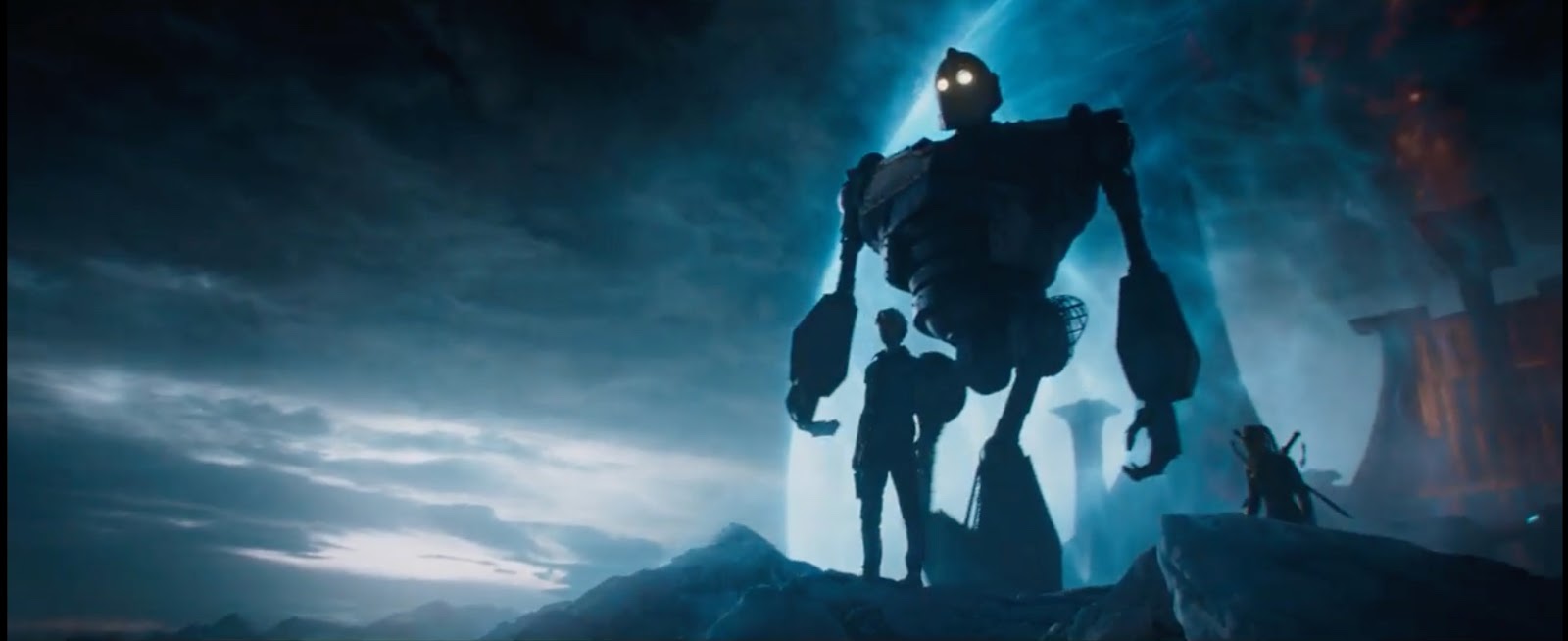
The story takes place in a not-too-distant future where the world has gotten so crummy, the majority of its citizens have taken to spending most of their time in a gargantuan virtual world known as the OASIS. Created by James Halliday, the OASIS is like a cross between the mind-bending acrobatics of The Matrix and the colorful visuals of Tron if both those worlds were centered around fun and games and an ‘anything goes’ mentality. Halliday’s recent death triggered an epic contest where the winner stands to gain full control over the OASIS in addition to a number of other prizes. In order to find this Easter Egg, however, one must first discover three keys Halliday has hidden in his robust virtual world.

Wade Watts is our hero - a 'pure at heart' Halliday aficionado and lover of all things 80s. While he wants to find the keys as much as anyone else, he loves the OASIS more for the adventure and the friends he’s made rather than a desire to win absolute control over everything. When he stumbles on a sinister corporation’s plot to win Halliday’s contest in order to rework and commercialize the OASIS for financial gain, Wade and his friends will stop at nothing to prevent this from happening. 

As Wade, Tye Sheridan is tasked with playing the blandest of bland lead characters. He does an admirable job, instilling Wade with an endearing, nerdy quality that makes him instantly likable. In Cline’s novel, Wade’s constant reference-dropping made him feel like an obnoxious know-it-all. His ability to solve any problem thrown his way killed any potential suspense the story had to offer. Sheridan’s wide-eyed portrayal makes Wade come across as goofy and adorable more than an annoying genius. As depicted on screen, Wade is just a nerdy kid who stumbles on the right answers at the right time with a little help from his friends.

One of these friends (and the obligatory love interest) is Artemis, one of the OASIS’ legendary top players. In Spielberg’s adaptation, Artemis is given a more active role in the story, another wise storytelling decision. Olivia Cooke in the role is one of the film’s highlights. She makes a far more interesting protagonist than Wade. Ben Mendelsohn is appropriately menacing as the film’s primary villain Nolan Sorrento, the head of the evil corporation bent on winning Halliday’s contest and ruling the OASIS. His scenes with T.J. Miller’s i-R0k offer some of the film’s biggest laugh-out-loud moments. Even thought the cast spends most of their time as cartoonish digital avatars, they still do a bang-up job.

Perhaps the most disappointing aspect of Spielberg’s adaptation is its lack of edge, its seeming disinterest in ascending above the rest of the pack to achieve something more memorable. Why attach a filmmaker like Spielberg if you weren’t going to shoot for the stars? His crowd-pleasing, fast-paced sensibilities are on full display, but frankly it feels like this could have been directed by anyone. That special quality Spielberg brings to his best works gets little chance to shine, replaced by one familiar CGI set piece after another.

Ready Player One’s candy-coated sensibilities also prevent the film from developing real-world stakes. When things go wrong in the real world and people die, the consequences are hardly felt by any of the characters. Little excitement is generated beyond the ‘gee-whiz’ thrill of the colorful action and visuals, but there’s hardly any risk It’s not all that dissimilar from the sequences in the OASIS. 

Speaking of which, I have to give credit where credit is due. The OASIS is a visual effects masterwork. The film’s exciting visual moments take place in this digital playing field. I was concerned the switch to the virtual world and reliance on CGI characters would create a disconnect, but it ended up reinforcing the universe all the more and never once took me out of the experience. There are some wonderful visual references and one extended sequence involving a re-creation of iconic scenes from Stanley Kubrick’s The Shining is a particular standout.

It all leads up to your standard, computer-generated BIG BATTLE SEQUENCE that will boggle your senses and leave you completely unmoved, a standard for many blockbusters in this day and age. It concludes with a sappy, hamfisted ‘put down your phones and go outside’ message that seems fitting for the times, but insincere based on what’s come before. (After all, none of these people would have met without the OASIS in the first place.)

Ready Player One won’t ever be mistaken for one of Spielberg’s finest moments, nor do I expect it to be remembered much in the coming years, but it is undoubtedly an enjoyable ride. I’d say I was disappointed it wasn’t anything more than the sum of its parts except I didn’t expect it to be. While it’s undoubtedly an improvement on its source material, it reinforces how little of substance there is to it. If you’re already a fan of the novel, you’ll have a good time; if you just want a fun, fast-paced blockbuster, you should walk away happy. If you want an engaging, involving experience that will blow your mind, you might be off staying home and playing video games instead.

Thursday, March 1, 2018

Shawn Eastridge's Top Ten Favorite Films of 2017 (and all those other ones too)


The Oscars are happening this Sunday! And what better excuse to scrounge together a list of my favorite 2017 films. Sure, it might be a bit late to post this, but it's my blog so DEAL WITH IT! Here, at long last, are my Top Ten Favorite Films of 2017.

Before we get started, here are the films I missed still haven't seen, but hope to get around to seeing some day:


  • DARKEST HOUR
  • THE FLORIDA PROJECT
  • GERALD'S GAME
  • GOOD TIME
  • THE GREATEST SHOWMAN
  • HOSTILES
  • I, TONYA
  • JUMANJI: WELCOME TO THE JUNGLE
  • THE KILLING OF A SACRED DEER
  • KINGSMAN: THE GOLDEN CIRCLE
  • LOGAN LUCKY
  • MOLLY'S GAME
  • T2: TRAINSPOTTING
  • WONDER

THE TOP TEN


10. LADY BIRD
(Directed by Greta Gerwig)

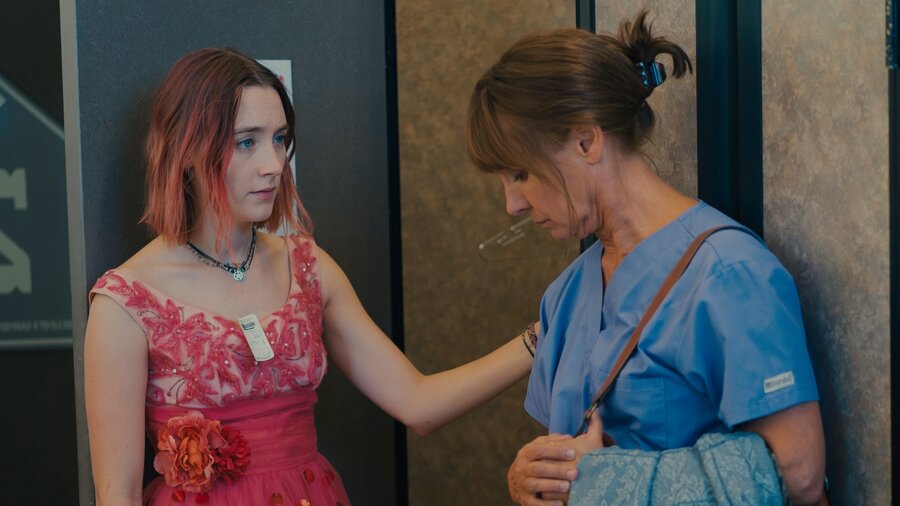
Lady Bird has no shortage of enthusiasm and spunk and it’s got the heart to match. Greta Gerwig’s directorial debut makes a lasting impression thanks to sharp writing and excellent performances from its cast led by Saoirse Ronan and Laurie Metcalf. Gerwig does an excellent job balancing zany humor and characters with sincere emotion and modesty.


9. THE SHAPE OF WATER
(Directed by Guillermo del Toro)


Guillermo del Toro is one of the greats and has gone far too long without this kind of acclaim and awards attention. Not only has he crafted some of the most imaginative and beautiful works of cinema this century (The Devil’s Backbone, Pan’s Labyrinth, Crimson Peak), he’s made some of the most crowd-pleasing and heartwarming entertainments (Hellboy 1&2). The Shape of Water is the second of his English-language films to demonstrate his more thoughtful, ‘arthouse’ sensibilities. It works as both a culmination of his own career, which favors a running theme of acceptance and appreciation of ‘the other,’ in addition to being a love letter to the movies and movie monsters in particular.


8. BABY DRIVER
(Directed by Edgar Wright)

No one can make a kinetic action film like Edgar Wright and Baby Driver is further proof. It’s a fast-paced, hilarious and gripping crime thriller/musical (yes, you read that right), and maybe, JUST MAYBE, the most fun I had at the movies in 2017. Not to mention that glorious soundtrack, which, thanks to Wright’s direction and Paul Machliss and Jonathan Amos’ editing, becomes just as integral a player as the actors.


7. LOGAN
(Directed by James Mangold)

Logan is the rare beast that transcends its genre trappings to become something more. It’s brutal, bloody and easily the best of the three Wolverine films, though to be honest that’s not saying much. What is saying much is James Manigold has delivered a superb send-off for the much beloved character and Hugh Jackman has never been better.


6. GET OUT
(Directed by Jordan Peele)

Jordan Peele’s first feature chucks him right to the forefront of Exciting New Directors. It’s one of the most assured directorial debuts I’ve ever seen. With its intelligent view on the country’s racial divide paired with iconic imagery, heart-wrenching thrills and a raucous sense of humor, Get Out is an instant horror classic that I am more than happy to welcome into my annual Halloween viewings.


5. CALL ME BY YOUR NAME
(Directed by 
Luca Guadagnino)

Call Me By Your Name
is a beautiful coming-of-age romance that captures in vibrant detail the joy and sadness that goes hand in hand with young, unbridled and passionate love. Everything about its setting and premise screams ‘pretentious,’ and yet it side-steps these descriptors, coming across as genuine and sincere in its emotions. Sometimes achingly so. Couple all that with those gorgeous Italian vistas (expertly captured by Sayombhu Mukdeeprom’s cinematography) the excellent soundtrack and the incredible performances and baby, you got a stew goin’. Timothée Chalamet might not walk away with the Oscar come Sunday, but he sure did walk away with my heart. (And don’t even get me started on the Armie Hammer snub. We’ll be here all day.)


4. BLADE RUNNER 2049
(Directed by Denis Villeneuve)

You say, “Blade Runner sequel,” and I respond, “Terrible idea.” But that was before I found out Denis Villeneuve was attached to direct backed by renowned cinematographer Roger Deakins. Throw in Ryan Gosling for good measure and my interest is piqued. What’s more impressive than the team assembled to create this 35-years-later sequel is that it would manage to hold a candle to Ridley Scott’s ground breaking 1982 classic. Not only does Blade Runner 2049 earn its place as a worthy follow up, it manages to craft a more compelling character drama, deepening its predecessors' themes while paving its own way. An incredible accomplishment that will no doubt be analyzed and scrutinized in the years to come, joining the ranks with Blade Runner as one of the great cinematic works of our time.


3. WAR FOR THE PLANET OF THE APES
(Directed by Matt Reeves)

A powerful conclusion to one of the best film trilogies this side of The Dark Knight. Writer/Director Matt Reeves pulls out all the stops for a thrilling and emotional finale featuring what may be Andy Serkis’ finest performance to date. War may be dark and tragic, but it is also stunning and emotional, daring in its subject matter and vastly more intelligent than most effects-laden blockbusters. So impressive is the effects work here that I never once thought of the apes as anything other than flesh and blood creatures occupying real space in their environments. I’m still giving the edge to Dawn of the Planet of the Apes, but I applaud Reeves and co. for committing to their somber tone and seeing this trilogy through to its satisfying and masterful conclusion.


2. TWIN PEAKS: THE RETURN
(Directed by David Lynch)

No, I’m not trying to add fuel to the fire of the debate that is the whole ‘Is Twin Peaks: The Return a TV Show or a film?’ thing. I know some critics have argued in favor of the latter, spurred on by David Lynch and Mark Frost’s insistence that the new season was written as a single entity and filmed as such, and that’s fine. (If you must know, I error on the side that insists it should be seen as television) 

But, here’s the thing: I don’t do a favorite TV shows list and I needed to profess my love for Twin Peaks: The Return SOMEWHERE. So here we are. 

With this much-anticipated third season, Lynch and Frost took full advantage of the creative freedom offered by Showtime and created something that blew the doors wide open on what television, and visual storytelling in general, could be. Week after week I never knew what to expect. All I knew was I was in for a treat that would engage and challenge me in a way few other films or shows ever have. By the time the series reached its baffling, mind-boggling conclusion, I knew for certain it would go down as one of the most unforgettable viewing experiences I’d ever had.


1. DUNKIRK
(Directed by Christopher Nolan)

Dunkirk is a cinematic triumph of the tallest order and one of the finest examples of the artform I’ve ever seen. Throughout his career, Christopher Nolan has always displayed a mastery of his craft, but never has he produced such a strong, visually oriented narrative. It’s as if everything in his career was leading to this distilled example of the medium’s power. His insistence on using practical sets, props and effects only adds to the experience. I had the immense pleasure of attending the 70mm IMAX presentation and the experience was overwhelming. This may, in fact, be his best film yet, which, when you consider a filmography that includes the likes of Memento and The Dark Knight, is a major accomplishment. Honestly, this one joins the ranks with Mad Max: Fury Road as one I could watch on repeat, I love it so dearly.

But beyond its undeniable technical achievements, Dunkirk succeeds as a celebration of the human spirit, our capacity for compassion, our struggle to survive against all odds and our willingness to put ourselves in harm's way for the greater good. Another modern classic from one of our greatest living filmmakers. 

**********

That's our show, folks! Thanks for tuning in. And for those interested, here are the other movies that either missed it by *that* much or just weren't very good. See you next year! (Or technically this year?)

**********

THE OTHER TEN

11. THE BIG SICK (Directed by Michael Showalter)

12. COCO (Directed by Lee Unkrich)

13. STAR WARS EPISODE VII: THE LAST JEDI (Directed by Rian Johnson)

14. JOHN WICK: CHAPTER 2 (Directed by Chad Stahelski)

15. THE MEYEROWITZ STORIES (NEW AND SELECTED) (Directed by Noah Baumbach)

16. THREE BILLBOARDS OUTSIDE EBBING, MISSOURI (Directed by Martin McDonagh)

17. OKJA (Directed by Bong Joon-Ho)

18. THOR: RAGNAROK (Directed by Taika Waititi)

19. WONDER WOMAN (Directed by Patty Jenkins)

20. A GHOST STORY (Directed by David Lowery)


HONORABLE MENTIONS

  • AMERICAN MADE (Directed by Doug Liman)
  • DETROIT (Directed by Kathryn Bigelow)
  • FATE OF THE FURIOUS (Directed by F. Gary Gray)
  • GUARDIANS OF THE GALAXY VOL. 2 (Directed by James Gunn)
  • IT (Directed by Andrés Muschietti)
  • IT COMES AT NIGHT (Directed by Trey Edward Shults)
  • MOTHER! (Directed by Darren Aronofsky)
  • THE POST (Directed by Steven Spielberg)
  • SPIDER-MAN: HOMECOMING (Directed by Jon Watts)
  • STRONGER (Directed by David Gordon Green)

BIGGEST DISAPPOINTMENTS

  • ALIEN: COVENANT (Directed by Ridley Scott)
  • BEAUTY AND THE BEAST (Directed by Bill Condon)
  • THE DISASTER ARTIST (Directed by James Franco)
  • PHANTOM THREAD (Directed by Paul Thomas Anderson)
  • POWER RANGERS (Directed by Dean Israelite)

THE WORST OF THE BUNCH

  • BAYWATCH (Directed by Seth Gordon)
  • JUSTICE LEAGUE (Directed by Zach Snyder)
  • THE MUMMY (Directed by Alex Kurtzman)


Friday, February 9, 2018

Black Panther - Film Review


**WARNING: MINOR SPOILERS WITHIN**

There’s no denying the cultural significance of a film like Black Panther in today’s blockbuster landscape. It’s the first film in the Marvel Cinematic Universe to feature a predominantly black cast. Just this fact alone marks Black Panther as a singular entry in this franchise and a major achievement in its own right, and with the excellent writer/director Ryan Coogler at the helm, a strong ensemble led by the likes of Chadwick Boseman, Lupita Nyong’o and Michael B. Jordan, stunning visuals and an expansive, believable world, it stands as one of Marvel Studios’ most unique offerings yet.

That’s the good news.

The bad news is it still succumbs to the standard Marvel movie weaknesses: all-too familiar story beats and an underdeveloped villain. Plot-wise, it feels like bits and pieces of movies we’ve seen before, a little James Bond here, a little Lion King there (no joke). But while the predictable plotting and simplistic character beats hold Black Panther back from true greatness, they can’t quell the overall entertainment value and delight of Coogler’s unique vision, a vision which adds further, much-appreciated variety to the MCU.

I won’t go into the plot too much since there’s still a week to go before the film is officially released, but I’ll offer a brief summary. In the aftermath of his father’s murder (recalled in a brief flashback), T’Challa a.k.a. Black Panther returns home to take his rightful place as Wakanda’s new king. But while T’Challa would prefer to keep his people and resources safe by cutting them off from the rest of the world, a force from outside Wakanda’s borders threatens their very existence and a dark secret from the royal family’s past could bring about their kingdom’s destruction.

Black Panther takes its time doling out information at the start, building its expansive world and setting the stage for events to come. It’s a bit slow and plodding with little action or excitement, but Coogler combats this by filling the frame with colorful visuals and endearing characters to keep us engaged. It’s one of the few films in the MCU that has a strong visual identity, its striking production design and effects work feel unlike anything we’ve seen in this universe before. Wakanda teems with life, beauty and culture; it’s a living, breathing world you totally buy into.

Things pick up when the story transitions into its fast-paced second act, and from that point on the awesomeness rarely lets up. The action sequences are exciting and engaging, with some amazing fight choreography. One sequence in particular, which features a fluidly moving camera ascending between two levels as it follows multiple fight scenes without a single, visible cut, is an astonishing achievement. This is followed by another of the film’s highlights, a breathtaking car chase through South Korea’s fluorescent cityscapes, featuring Black Panther’s superhuman acrobatics as he leaps and flips between cars and buildings like a total BAMF. As with most of these movies, Black Panther’s third act devolves into the standard CGI action climax we’ve come to expect, but Coogler has done such an excellent job getting us to that point and ensuring we’re invested in these characters it doesn’t hinder its effectiveness.

Rounding out Black Panther’s greatest assets is its phenomenal ensemble. As the titular hero Chadwick Boseman does an excellent job conveying the character’s nobility and conflict. Lupita Nyong’o plays the love of his life, dishing out sage wisdom and ass-kicking in equal measure, and few things are more enjoyable to watch than Danai Gurira of Walking Dead fame twirling a spear and wiping out the baddies. Andy Serkis and Martin Freeman also make a welcome return, reprising their roles from Avengers: Age of Ultron and Captain America: Civil War respectively and giving us the Bilbo/Gollum reunion we’ve all been waiting for.

The ensemble’s standout, however, is newcomer Letitia Wright as T’Challa’s younger sister Shuri. She serves as the film’s ‘Q,’ developing new weapons and technology for her older brother. Many of the film’s highlights and biggest laughs involve their sibling squabbling and interactions.

This brings me to perhaps my biggest beef with Black Panther: its villain, Erik “Kill Monger” Stevens. As Erik, Michael B. Jordan gets a lot more to work with than the standard Marvel villain. His motivations are strong, personal and much more human than your average ‘take over the world’ schemes….even though that ends up being his ultimate goal. But you understand why he feels this way.

The problem is we don’t spend enough time with Erik to get a real feel for who he is. He’s not introduced as the film’s true antagonist until about halfway through the runtime and by that point we’ve spent so little time with him, it feels like an odd left turn, unmotivated by the events leading up to it. Jordan’s performance is good, but one-note. Erik is angry, brutal and aggressive without much room for nuance or subtlety. It’s easy to understand what he feels and why he feels that way, but it’s harder to empathize with his brutal methods. As portrayed, he comes across more as a scorned, angry teenager than someone with genuine grievances. It undercuts what would otherwise be one of the stronger villains in the land of Marvel and it’s a shame that Coolger and co-writer Joe Robert Cole couldn’t interweave Erik’s storyline more organically into the rest of the film.

Black Panther works in so many ways and feels so creative and full of great ideas that you can’t help but wish it felt a little more original in the storytelling department. It’s a reminder that it’s possible to recognize the cultural significance of a product while also acknowledging that it falls short in other areas. That being said, Black Panther is one of the stronger solo hero entries in the MCU, succeeding as an exciting action/adventure that carves out a new section for this expansive universe to play in. It contains moments that will take your breath away and more than make up for its weaker tendencies.

But perhaps Coogler’s greatest accomplishment here is that he was able to dive into the well-oiled machine that is Disney/Marvel and create something that feels like a sincere expression of his own heart, a product that feels epic, but also has something important to say. In that regard, Black Panther is more than just a movie - it’s a celebration of a culture that has for far too long been marginalized and under-represented in these kinds of movies. I can’t imagine how exciting it must be for a young black boy or girl to finally get to cheer on superheroes that look like them.

It’s about damn time.

And for those interested, here’s where Black Panther fits into my MCU rankings:

  1. The Avengers 
  2. Captain America: Winter Soldier 
  3. Captain America: Civil War 
  4. Iron Man 
  5. Thor: Ragnarok 
  6. Iron Man 3 
  7. Guardians of the Galaxy Vol. 2 
  8. Black Panther 
  9. Guardians of the Galaxy 
  10. Spider-Man: Homecoming 
  11. Captain America: The First Avenger 
  12. Avengers: Age of Ultron 
  13. Ant-Man 
  14. Doctor Strange 
  15. Iron Man 2
  16. Thor: The Dark World 
  17. Thor 
  18. The Incredible Hulk

Friday, October 6, 2017

Blade Runner 2049 - Film Review


I was a senior in high school the first time I saw Blade Runner. I’d received the bare bones Director’s Cut DVD as a Christmas present from a friend (This was before 2007’s robust Final Cut release) and I’d caught an awful cold that left me exhausted and somewhat delusional.

For some reason, I thought this was the appropriate state of mind to watch this dark, disturbing and cerebral film.

For two hours I sat there and watched Ridley Scott’s visual masterpiece, totally zonked and fading in and out of consciousness. Blade Runner is a tough enough pill to swallow when you’re not suffering from a massive head cold, and in this neurotic state of mind, I had no clue what to make of it. It’s a reaction not all that dissimilar from that of audiences back in 1982 when the film was first released.

But in the years since, film fans and critics have re-examined Blade Runner and come around to its groundbreaking and influential style, going so far as to call it a cinematic classic. It’s a film that gets better and better each time you watch it. I can attest to this personally. While my first viewing was less than satisfactory, I discovered a lot more to love the second time around. By my third viewing, I’d determined it was one of my all-time favorites.

I bring up this story because my experience watching Blade Runner 2049, the 35-years-later sequel, was very similar to my experience watching the original for the first time, minus the outright dislike.

Like its predecessor, Blade Runner 2049 isn’t interested in playing nice with the audience. Its methodical pacing (almost too methodical at times), limited emotional connection and lack of action sequences seem tailor-made to defy audience expectation and test the attention spans of those accustomed to the standard 21st century blockbuster. Its plotting is clunky and scattered, pointing in every which direction like a compass in constant motion seeking out Magnetic North. It doesn’t cover any visual or thematic territory that the original hadn’t already touched, and at 163 minutes it’s way too long.

And yet, despite these shortcomings, It is an undeniably fascinating viewing experience and one of the more intriguing and unconventional blockbuster releases of the 21st century. Director Denis Villeneuve has churned out some of the best films released in this past decade (Prisoners, Sicario, Arrival), but this is a crowning achievement of another sort. He’s managed to take a sequel no one thought they wanted and produced a singular vision that is both worthy of its predecessor’s legacy whilst impressively carving out a niche all its own. Even if it misses the mark in some respects, that’s still an extraordinary accomplishment.

Without getting too buried in the details, I’ll give you a very basic plot rundown (if you’d rather go in completely blind, you’ll want to skip the next couple paragraphs):

Ryan Gosling is ‘K,’ a Blade Runner tasked with bringing in or ‘retiring’ older Nexus models that have gone into hiding. During one of his assignments, K comes across information that could significantly alter the course of the future for humans and replicants alike. I don’t think it’s a spoiler for anyone who’s seen one of the film’s amazing trailers or posters to also inform you that Harrison Ford’s Deckerd character will show up at some point and play a role in these proceedings. Exactly how he gets involved and what the extent of his involvement is, well, I’ll leave that to you to discover.

Part of what made the original Blade Runner so powerful was its ambiguity. It asked many questions but provided few answers. You may or may not appreciate Blade Runner 2049's answering some of those lingering questions, but in the process it asks and answers even more along similar lines: the nature of humanity, love and what it means to have a soul. It’s intriguing for sure and there's plenty of ambiguity left over, but would have been far more powerful had some of the answers been a little less explicitly stated.

The film also suffers from a wealth of subplots, as if Villeneuve and screenwriters Hampton Fancher and Michael Green couldn’t decide what to focus on. Some of the best storylines are frustratingly underdeveloped, especially the one involving Tyrell stand-in Niander Wallace. (Here’s something I never thought I’d say: I wanted more Jared Leto in this movie. It’s one of the film’s most intriguing)

One of the more successful subplots involves love interest Joi, wonderfully portrayed by Ana De Armas. K’s relationship with Joi anchors the film with a sorely needed emotional connection.

As with the original film, Blade Runner 2049’s strongest aspects are its visuals and sound design. Ridley Scott and Jordan Cronenweth’s visual work in Blade Runner resulted in what is arguably the best-looking film ever made. That’s quite the standard to live up to, but if anyone would be up to the task, it’s legendary cinematographer Roger Deakins.

And boy oh boy, is he ever.

In a career spent crafting some of the most striking visuals in recent cinema history, Deakins has gone above and beyond here, delivering some of his best work. The visual effects mesh beautifully with his aesthetic, resulting in one of the most fully-realized and believable worlds since...well...Blade Runner. Maybe the movie gods will finally see fit to gift this incredible talent with the Academy Award that has so unfairly eluded him for his entire career.

Likewise, Hans Zimmer and Benjamin Wallfisch’s haunting score, paired with the incredible sound design, provides a bleak, otherworldly backdrop that unsettles and captivates in equal measure. I can’t wait to pick up a copy for myself.

Ryan Gosling’s performance as K is another of the film’s highlight. Gosling is, like Deakins and Zimmer, a master of his craft. He has played everything from charmers (La La Land) to cold-blooded hitmen (Drive) and even creepy boyfriends with impressive depression beards (The Notebook). Here he’s tasked with taking a relatively blank slate character and making us empathize with him, and he does so with such effortless finesse, you want to kiss the man.

Er...did I say ‘kiss?’ I meant to say…uh…Well...no...actually, on second thought, I did mean to say ‘kiss.’ (Call me, Ryan)

And Harrison Ford...I don’t want to say too much for fear I might give something away, but I was really impressed with his work here. I was afraid he might phone it in, but as with his reprisal of Han Solo in The Force Awakens, Ford gives his all, delivering an emotionally complex and touching performance.

Blade Runner 2049 is such an unconventional effort in this modern age of blockbuster cinema, I’m genuinely amazed Warner Bros. allowed it to be released as is. I have to extend major kudos to the studio for standing behind what is sure to be a divisive product. But despite its heady nature and methodical (sometimes to a fault) pacing, there is plenty here to engage and captivate patient, thoughtful audiences. I sincerely hope it makes a profit; we need more of this brave and challenging brand of mainstream filmmaking.

And much like my experience with the original Blade Runner, I have a feeling I could grow to appreciate this sequel more and more as time goes by. Whether I’d go so far as to someday call it one of my favorite films? Eh, that’s less likely. But who knows? Stranger things have happened.

...like a good Blade Runner sequel.


Tuesday, September 12, 2017

It (2017) - Film Review


It works on so many levels that I’m more than a little bummed I can’t say I loved it. (Loved ‘It’? The use of the word ‘it’ in this review is going to get confusing. Let’s just move past that and get on with it – oops, there it is again. And again. Oh no. Help.)

Let me be clear: I did enjoy the film.

Everything involving the kids, their friendship and their personal struggles is gold. But the Pennywise/horror stuff? Not so much. That’s nothing against Bill Skarsgård who is excellent as the ancient evil being that haunts the town of Derry, but the scares as orchestrated by director Andy Muschietti become repetitive and tiring. Each horror sequence is structured the same way: kid sees something creepy, goes off to investigate on their own, something terrifying jumps out at them, Pennywise shows up to add the obligatory punctuation mark to the sequence. What’s fun and scary at first becomes dull and tiring. I wanted the scares to cut deeper and be more cerebral and creepy instead of being bombarded by loud noises and shots of Pennywise lunging at the camera.

I’ll give Muschietti this much though: his interpretation does recognize the source material’s core strength: the Losers Club and the coming-of-age elements. When I first read It a couple years ago, I was surprised to discover a poignant, thoughtful and affecting story about growing up and bidding childhood farewell. It’s a beautiful novel and my favorite of Stephen King’s works. I was concerned the new movie would jettison this more thoughtful angle in favor of ‘oooo, here comes the scary clown.’ And while the ‘scary clown angle’ is present and borders on the cusp of obnoxiousness, Muschietti includes enough of the kids and their friendship to add additional layers to his adaptation.

Where It triumphs is in the quieter moments: the kids swimming and joking at the water hole, riding around on bikes exploring the town and being there for each other in their moments of need. I found myself genuinely moved by these characters and their interactions and I can’t praise this ensemble enough. You always take a risk when your cast is made up of kids. There are few things more grating than a bad child performance and with a movie like It that relies so heavily on its young actors, that can make or break the deal. Thankfully It features one of the finest young casts I’ve seen with newcomer Sophia Lillis being the standout as the Losers Club’s only female member.

It might not quite reach the high bar of modern horror classics such as The Babadook, It Follows or The Witch (The VVitch?), but it’s head and shoulders above the more recent substandard offerings of the genre. I’m excited to see what the inevitable sequel, which will focus on the grown up versions of the Losers Club, has to offer. I think Muschietti has the chops to pull it off if he tones down the more generic tropes associated with the genre and focuses more on the characters and their bond with one another.